Every claim gets a source.
A figure, a date or a named study in a draft carries a primary source: a filing, a paper, or your own dataset. Secondary summaries don’t qualify.
You’ll see it asSource notes in the margin of every draft.
About · Westport, CT
Lyceum Letters is a ghostwriting studio for B2B founders and subject-matter experts. You give us 60 minutes of recorded conversation. We return 4 to 8 published pieces per fixed-scope package, each one under your byline, each claim traced to a source.
Colophon · the studio at a glance
Why “Lyceum”
Most experts explain their work better out loud than on a page. The transcript shows it: the sharpest line sits between two false starts, and nobody writes it down. So Lyceum Letters begins with the recording, never with a blank document.
Talk first. Then write, from what was said.
From the recording the studio runs like a small press: interview, research against primary sources, draft, edit, fact-check. Every piece leaves in your name with its sources in the margin, from our desk on Ridge Road in Westport.
lyceum /laɪˈsiːəm/ · noun
Style sheet
These sit in the statement of work, next to the price. If a rule can’t be met for your subject, the quote says which one and why.
A figure, a date or a named study in a draft carries a primary source: a filing, a paper, or your own dataset. Secondary summaries don’t qualify.
You’ll see it asSource notes in the margin of every draft.
Each article defends one position you would repeat in public. Two arguments become two pieces, and two line items.
You’ll see it asA one-sentence thesis at the top of draft one.
We keep the verbs, analogies and sentence length from your transcript, and cut the filler around them.
You’ll see it asRevision round one: you strike any line you wouldn’t say aloud.
Percentages name their base, dollar figures their year, durations their start point. “Most of the timeline” becomes a count.
You’ll see it as“Eleven of fourteen weeks,” never “a big chunk.”
Anything you flag as off-record during the interview is struck from working copies of the transcript and never enters a draft.
You’ll see it asA redacted transcript back within 24 hours.
“Leading,” “innovative” and “robust” are cut unless the draft can show what makes them true.
You’ll see it asA short cut-list returned with each draft.
Who touches your piece
Each pass has one job and one hand-off, so you always know what’s in the file and what’s coming next.
One interviewer asks the follow-up you’d skip: the example, the number, the objection a skeptical buyer would raise. You talk; the recorder runs.
Hand-offRecording, plus a transcript with the 8–10 quotable passages marked.
Every claim in the transcript is checked against a primary source: filings, papers, your own data. Claims that don’t hold are flagged to you, not smoothed over.
Hand-offA source sheet listing what was verified and what was dropped.
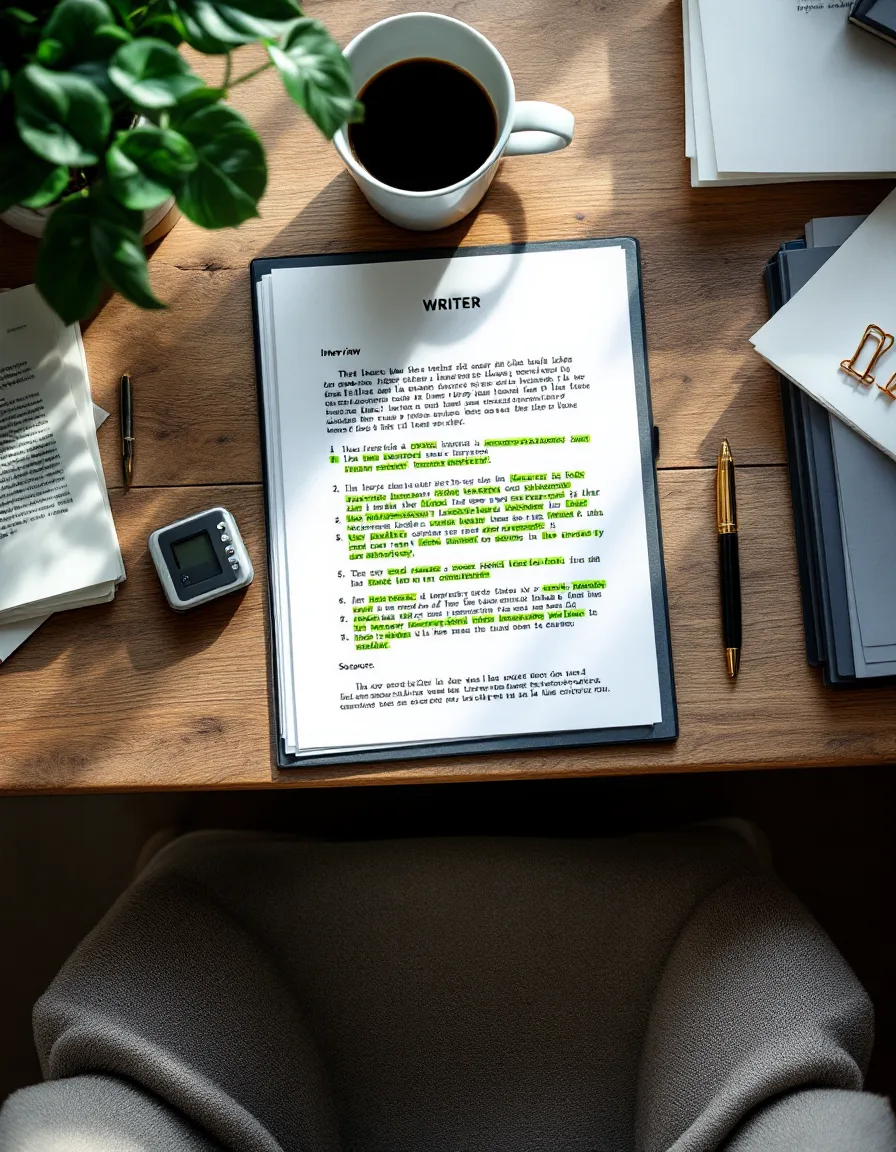
The writer drafts in your syntax from the marked passages, keeping about a fifth of the raw transcript. First draft lands by business day 10.
Hand-offDraft with source notes in the margin.
Two revision rounds: a voice check, then a fact check. A second editor reads the final against the source sheet before anything ships.
Hand-offCMS-ready HTML, LinkedIn queue and newsletter draft.
Fit check
A good fit
A poor fit
Scoping call · 25 minutes · no charge
Tell us who you want to reach and what you’d defend in public. You’ll leave with a topic map for your first four pieces and a fixed quote in writing.
We reply within one business day.
7 N Ridge Rd, Westport, CT 06880
Find the studio door